Senior downsizing in Toronto is rarely a one-day project. Most families face a bigger change than the moving date itself: a parent leaving a long-time home, a house shrinking to condo scale, or a retirement residence move with strict move-in rules, tight suite space and a short elevator window. This guide covers downsizing services in Toronto, retirement residence moving and senior relocation, from the first sort to move-in day.
That is why the real work starts before the packing does. Families decide what is actually moving, what should wait in storage, what belongs with another relative, and what to donate or remove before moving day creates pressure.
This guide answers the questions Toronto families actually ask when helping a parent move. It covers downsizing decisions, packing, storage, condo and residence logistics, furniture planning and the details that make the day run smoothly.
Table of Contents
- What Does Senior Downsizing Involve?
- When Should Downsizing Start Before a Move?
- How Do I Help My Parents Downsize Without Taking Over?
- The 5-Bucket Downsizing Method
- How Long Does Downsizing a Family Home Usually Take?
- Should Downsizing Happen Before or After Booking Movers?
- Moving From a Toronto House to a Condo
- What Information Should We Ask the Retirement Residence Before Moving?
- How Early Should a Retirement Residence Move Be Booked?
- Do Retirement Residences Have Specific Moving Hours?
- How Do You Decide What Furniture Will Fit in a Retirement Residence or Condo?
- What Should You Do With Furniture That Will Not Fit?
- Should We Rent Storage Before Downsizing?
- What Should Go Into Storage?
- How Do You Organize Belongings Going to Several Family Members?
- Can Movers Pack an Entire Home for a Senior?
- How Do You Move Sentimental or Fragile Belongings?
- Can Movers Unpack and Set Up the New Home?
- What Should Adult Children Prepare Before Moving Day?
- Do Toronto Condos Require Elevator Reservations?
- What Happens If the New Home Is Not Ready?
- How Can a Family Make Moving Day Easier for an Older Parent?
- Senior Downsizing Checklist
- When Should You Hire Professional Help?
- Frequently Asked Questions
- Planning a Senior Move or Downsizing in Toronto?
What Does Senior Downsizing Involve?
It involves two jobs happening at the same time: reducing the contents of the current home and planning exactly what can work at the next address. The move itself is only one part of it.
In practical terms, senior downsizing means reviewing furniture, clothing, kitchen items, paperwork, keepsakes and storage areas with the new space in mind. A family home in Etobicoke or North York may hold decades of belongings. A condo or retirement residence suite usually cannot absorb all of it, and trying to decide everything at the last minute leads to rushed choices.
The first useful document is not a packing checklist. It is the destination floor plan. If the new home has one bedroom, limited linen storage and a smaller dining area, those details should guide decisions early. A sofa that fits in the living room on paper may still fail at the building elevator, the suite entry door or a tight hallway turn.
That is why measuring before moving day matters so much. Families often focus on room size and forget building access. In Toronto condos and retirement residences, the furniture has to work in three places: inside the suite, through the common areas and inside the elevator.
What downsizing actually covers
- Reviewing each room, closet, basement area and storage space
- Separating daily-use items from duplicates, overflow and things kept out of habit
- Measuring furniture before deciding what will move
- Creating clear destinations for items going to family, storage, donation or disposal
- Planning around condo elevator bookings, loading docks, parking rules and residence move-in windows
- Packing, unpacking and furniture placement in a way that makes the new home usable right away
Families comparing senior movers in Toronto should look beyond truck size and price. Ask how the move will be handled if some items go to storage, some to a residence, and some to family in another part of the GTA. That is where planning matters.
When Should Downsizing Start Before a Move?
For most Toronto family homes, six to eight weeks is a sensible minimum. If the home has been lived in for decades, or several adult children are involved, starting earlier is usually better.
The timeline depends less on the distance of the move and more on the amount of decision-making required. A short move from a detached house to a condo across town can take more planning than a longer move because every room forces a size decision, a furniture decision or a family decision.
Start with the spaces that carry the least emotional weight and the most volume: basement shelving, spare bedrooms, linen cupboards, garages, cold rooms and dining hutches. Leave everyday dishes, current clothing, medications and frequently used furniture until later.
Downsizing should begin before professional packing starts. Packers protect and organize what the family has already chosen. They should not arrive to find a home where the family still has to decide what is moving and what is not.
- First confirm the destination floor plan, suite measurements and building rules
- Next list the furniture and personal items that are definitely going
- Then work room by room and assign each item to a clear destination
- After that, book donations, family pickups, storage and disposal
- Only then should you lock in the final packing plan
Sentimental belongings almost always take longer than expected. One box of photos can take more time than an entire kitchen cupboard because people stop to remember, compare, call a sibling or change their mind. Build that delay into the schedule instead of pretending it will not happen.
How Do I Help My Parents Downsize Without Taking Over?
Support the process, but do not run over it. The best help is structure, not pressure.
Adult children are often at their most useful when they handle the practical work around the decisions. That can mean measuring furniture, speaking with the condo office, confirming residence move-in rules, arranging donation pickups, booking packing and unpacking services, or keeping track of what is going where.
What usually does not help is turning the home into a fast clean-out project. If one family member starts filling black bags while another is texting photos of side tables to cousins, the parent can quickly feel that the move is happening to them instead of with them.
Work one room at a time. Keep the categories visible. Make decisions in shorter sessions if needed. Two focused hours often accomplish more than an entire exhausting day.
- Ask what the parent wants nearby in the first week after the move
- Find out which furniture is part of daily life, not just part of the old house
- Talk about what can go to family now instead of being stored without a plan
- Notice what needs more time because it is sentimental, not because no one wants to decide
If siblings or extended family are involved, choose one coordinator. This matters more than most people expect. Without a point person, boxes get relabelled, pickup dates change, donation items drift back into the move pile, and movers arrive to conflicting instructions.
For broader public information about senior supports in Ontario, families can review the Government of Ontario’s information and services for older adults.

The 5-Bucket Downsizing Method
The five-bucket method works because every item gets a destination before pack day. That reduces confusion, duplicate work and last-minute arguments at the truck.
Use labelled zones, coloured stickers or a written inventory. The method is simple, but it only works if everyone in the house is using the same system.
1. MOVE
These are the items going directly to the new home. They should include daily-use furniture, clothing, toiletries, medications, selected kitchen items, documents, chargers, comfort items and the pieces that make the new space feel familiar right away.
2. STORE
Store items that have a clear reason to be kept but no immediate place to go. Good examples include seasonal décor, records the family wants to review later, furniture being held for another relative, or items the parent is not ready to part with while adjusting to the new space.
Do not send mystery boxes into storage. If the label says “miscellaneous,” nobody will want to deal with it later.
3. GIFT
Gift items need a named recipient, not a vague plan. Write the person’s name directly on the item or inventory sheet and set a pickup deadline. This is especially important when relatives live outside Toronto and cannot collect things right away.
4. DONATE
Donate usable items that are no longer needed and not claimed by family. Confirm donation rules in advance, especially for furniture, mattresses, electronics and pickup timing. Habitat ReStore may accept various household items, but acceptance can vary by location and condition.
5. RECYCLE OR DISPOSE
Some items should not stay in the home another month just because no one wants to deal with them. Broken chairs, damaged shelving, unsafe furniture and unusable household items should be separated early. Toronto residents can review the City’s Recycling, Organics and Garbage information for disposal guidance.
How Long Does Downsizing a Family Home Usually Take?
It usually takes longer than families expect. Even a smaller condo does not make the decision process faster.
A one-bedroom condo move from a long-time family house can involve decades of paperwork, furniture, keepsakes, holiday items and duplicate household goods. Homes that look manageable at first can take several weekends just to review properly, especially if adult children live outside Toronto and can only help on certain dates.
The slowest parts are usually the ones people underestimate: photo albums, filing cabinets, china cabinets, craft rooms, basements and furniture discussions. If the family is preparing a parent for a retirement residence move, add extra time for measuring, suite planning and confirming move-in windows.
Should Downsizing Happen Before or After Booking Movers?
Start downsizing before the final packing phase, but do not wait until every decision is complete before speaking with movers. The planning should overlap.
A family often needs moving dates, storage options or packing help confirmed early, especially during busy times of year. At the same time, movers need a realistic sense of what is actually going. The best approach is to begin sorting first, then speak with CARGO CABBIE once the general scope is becoming clear.
Moving From a Toronto House to a Condo
A house-to-condo move is really a building-access project plus a downsizing project. The travel distance is often the easy part.
Toronto condos add timing restrictions that do not exist in most house moves. The elevator may be available only for a booked block. The loading dock may fit one truck at a time. Downtown parking may be limited or heavily enforced. Some buildings require a certificate of insurance in advance. Others insist on elevator padding, service elevator use or a weekday-only move.
- How elevator reservations are booked and how long the moving window is
- Whether there is a loading dock and whether it is shared
- What truck access and parking rules apply on moving day
- Whether the building requires insurance documents ahead of time
- What protection, booking forms or deposits are required
A move into a central Toronto condo may fail on logistics even if the packing is excellent. If the truck cannot stage near the entrance, the elevator window starts late, or a large cabinet does not clear the service elevator, the day can run off schedule quickly. That is why condo access details should be confirmed early, not a few days before the move.
For families comparing access needs and scheduling requirements, the Toronto condo moving service page is a useful reference.
What Information Should We Ask the Retirement Residence Before Moving?
Retirement residence moving in Toronto depends on details the building controls. Ask for the suite measurements, approved move-in window, access instructions and furniture restrictions before you lock in the moving plan. Those details affect almost every decision that follows.
Families are often given a suite number and a date, but not enough detail about how the building actually handles move-ins. That gap creates preventable problems. A bed may fit the suite but not the elevator. A dresser may need to arrive during a narrow weekday window. The residence may require labels on every box or a specific service entrance.
- Suite floor plan and key room measurements
- Door, hallway and elevator dimensions if available
- Approved move-in dates and exact time windows
- Service entrance, parking and loading instructions
- Any paperwork, insurance or labelling requirements
- Restrictions on furniture size, mattresses, appliances or wall-mounted items
- The name of the staff contact for moving-day coordination
Families can review the Retirement Homes Regulatory Authority for general information about licensed retirement homes and resident resources, but building-specific requirements should always come directly from the residence.
How Early Should a Retirement Residence Move Be Booked?
Book your retirement residence move as early as you reasonably can once the residence has confirmed the move-in timing. These moves often involve fixed windows that are less flexible than a standard house move.
Retirement residences may limit move-ins to certain days or times so they do not interfere with meals, medication routines, staffing or resident activity schedules. If the family waits too long, the preferred moving date may still exist on paper but become difficult to service properly once packing, storage and elevator timing are added.
Do Retirement Residences Have Specific Moving Hours?
Yes, many do. Never assume the residence will allow an all-day move or a last-minute arrival.
Some residences allow move-ins only during weekday daytime hours. Others assign a strict two- or three-hour window and expect the movers to use a designated entrance. Confirm this early, then build the packing and truck schedule around it instead of treating retirement residence moving like a normal residential move.
How Do You Decide What Furniture Will Fit in a Retirement Residence or Condo?
Measure the destination first, then measure the furniture, then check the access route. Room size alone is not enough.
Families often start by asking what furniture is most loved. The better first question is what furniture can actually work in the new space. In a retirement residence or condo, oversized hutches, sectionals, large dining sets and deep armoires are common trouble spots. Even if they physically fit the room, they may crowd the suite or reduce safe walking space.
A good plan looks at three things at once: the suite layout, the furniture dimensions and the path into the building. If a bed frame has to turn through a short hallway, if the table cannot fit the service elevator, or if a recliner blocks the route from bedroom to bathroom, it is not the right piece for the move.
What Should You Do With Furniture That Will Not Fit?
Decide before moving day whether each piece is going to storage, family, donation or disposal. Large furniture should never become a same-day decision.
This is where many family moves lose time. A truck is loaded, everyone arrives at the condo or residence, and then somebody realizes the sideboard is too wide, the loveseat blocks the bedroom door, or the dining set overwhelms the room. By then, every option is harder.
If a piece has clear future value, storage may make sense. When a relative wants it, treat it like a separate delivery, not a vague promise. Usable pieces that are no longer needed can go to donation. Anything damaged or no longer practical should be separated early for removal.
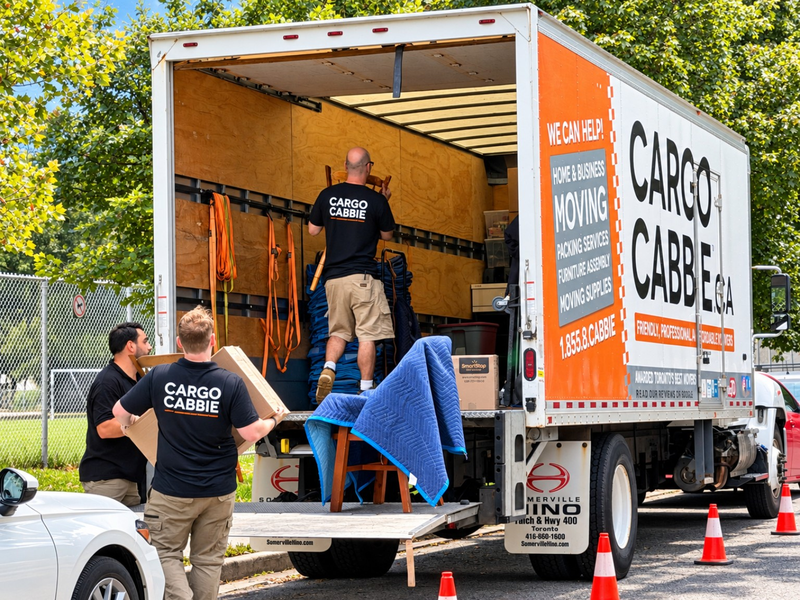
CARGO CABBIE also provides furniture removal and disposal for pieces the family has already decided not to keep.
Keep non-moving furniture physically separate from the move inventory. In a busy house, an unlabeled chair beside the front door often ends up on the truck.
Should We Rent Storage Before Downsizing?
Sometimes yes. Storage can be useful if the family needs time to make better decisions, but it should solve a specific problem rather than postpone every decision.
Temporary storage is often useful when a house closes before the condo is ready, when a retirement residence suite is not available yet, when renovations are still underway, or when adult children need time to divide furniture and keepsakes properly. It can also help if the parent wants to settle first and make a second round of decisions later.
What Should Go Into Storage?
Only items with a clear reason to be kept later should go into storage. If no one can explain why an item is being stored, it probably should not be there.
- Furniture being held for family or a later housing decision
- Seasonal items that will not fit the new home
- Files, keepsakes or collections the family needs more time to review
- Items tied to a timing gap between closing dates or possession dates
Label every storage box clearly and keep a written inventory. A good storage plan should let the family retrieve a document box or one chair without reopening the entire decision process six months later.
How Do You Organize Belongings Going to Several Family Members?
Use names, destination addresses and deadlines. General family intentions are not enough.
If one daughter is in Toronto, one son is in Ottawa and a grandson is taking the desk next month, those items need to be marked clearly before pack day. Otherwise, things drift into the wrong pile, go into storage unnecessarily or end up on the main truck by mistake.
- Label each item with the recipient’s name
- Add the delivery address or pickup plan
- Set a firm deadline for family pickup
- Keep a master list with one family coordinator updating it
Can Movers Pack an Entire Home for a Senior?
Yes, movers can pack an entire home, but the family should make the keep, store, gift, donate and dispose decisions first. Packing works best once the sorting is clear.
Full packing can be especially helpful if the move involves a large house, fragile items, limited family availability or a retirement residence move with a tight timeline. It also reduces the risk of rushed, inconsistent packing across multiple family helpers.
How Do You Move Sentimental or Fragile Belongings?
Separate them early, label them clearly and give them more time than you think they need. Sentimental packing is slow because the decision-making is slow.
Photographs, letters, small heirlooms, artwork, collectibles and memory boxes should not be mixed into general household cartons. Important documents, medication information, keys, identification and irreplaceable personal items should travel with the family rather than being packed deep in the truck.
If the family wants help protecting delicate household items, packing services can be useful for china, glassware, framed pieces and awkward items that are hard to secure properly.
Can Movers Unpack and Set Up the New Home?
Yes, that can be part of the plan. Unpacking and placement are often worth arranging for a senior move because they make the new space functional much sooner.
The first goal at the destination is not to empty every box. It is to make the home livable right away. That usually means setting up the bed, bathroom, main seating area, everyday clothing, medications, lamps and essential kitchen items first. Clear box labels by destination room help this happen quickly.
What Should Adult Children Prepare Before Moving Day?
Prepare the logistics, the paperwork and the decision list before the truck arrives. The more that is settled in advance, the calmer the day feels for the parent.
- Confirm the move schedule, addresses, access instructions and building contacts
- Prepare a clear inventory of what is moving, stored, gifted, donated and removed
- Pack an essentials bag with documents, medications, chargers, glasses, toiletries and a change of clothes
- Make sure one family coordinator is available to answer questions
- Plan furniture placement in the new home before unloading starts
Do Toronto Condos Require Elevator Reservations?
Many do, and families should assume they need to ask early. Elevator bookings can shape the entire moving schedule.
Toronto condo buildings often assign a service elevator, a fixed time slot and a loading area with strict rules. If the reservation is missed or too short for the actual move size, the whole day becomes harder. Families moving from a house in Etobicoke or North York into a downtown condo should confirm this as soon as the date is known.
What Happens If the New Home Is Not Ready?
Storage or a staged move may be the best answer. The main goal is to avoid forcing rushed decisions because the destination is delayed.
This can happen if a condo closing shifts, a retirement residence suite is not yet available, renovations run late or a family member needs more time to receive furniture. In those situations, Toronto storage moving services can help bridge the gap without turning the move into chaos.
How Can a Family Make Moving Day Easier for an Older Parent?
Keep the day structured, quiet and predictable. Too many voices and too many open questions make the move harder than it needs to be.
It helps if one person speaks with the movers, one essentials bag stays close, and the bedroom and bathroom are set up first at the destination. Familiar items should be easy to find. If possible, avoid turning moving day into a family reunion. Extra people often create more confusion than help.
Senior Downsizing Checklist
Use this checklist to keep the move moving forward without leaving major decisions until the last week.
Six to eight weeks before
- Confirm the new home or residence measurements
- Start with lower-use rooms, storage areas and basement spaces
- Create the MOVE, STORE, GIFT, DONATE and RECYCLE/DISPOSE categories
- Choose one family coordinator
- Begin measuring major furniture and comparing it with the destination floor plan
- Ask the condo or residence for moving rules, windows and access details
Four weeks before
- Finalize the main furniture and household inventory
- Arrange donation pickups and family collections
- Decide what requires storage and what should not be moved at all
- Book moving, packing or furniture removal services
- Sketch the room layout for the new home
Two weeks before
- Confirm the elevator, loading dock and move-in window
- Start packing non-essential rooms and clearly separate storage and family-delivery items
- Label boxes by destination room, contents and priority
- Prepare documents, medication information and essentials that will travel with the family
- Confirm truck access, parking and on-site contacts
One week before
- Pack daily essentials separately
- Finish most household packing
- Keep important documents and valuables with the family
- Reconfirm the move schedule and building instructions
- Make sure disposal and donation items are fully separate from the move inventory
Moving day
- Keep the essentials bag accessible
- Have one family coordinator answer mover and building questions
- Direct boxes and furniture to the correct room on first placement
- Set up the bedroom, bathroom and main seating area first
- Check the old home, garage, storage shelves and closets before leaving
First week after the move
- Open priority boxes first
- Confirm that gifted, donated and stored items went to the right destination
- Break down packing materials responsibly
- Wait before buying replacement furniture until the space has been lived in for a few days
- Review any remaining storage decisions with a clear timeline
When Should You Hire Professional Help?
Bring in help when the move has too many moving parts for the family to manage comfortably on its own. That often means a larger home, a tight deadline, multiple destinations, fragile pieces, condo restrictions or limited family availability. A full senior relocation in Toronto is easier to run when one team manages every stage.
A common Toronto scenario is a parent leaving a house, moving into a condo or residence, sending selected furniture to storage, and having several family pickups happen at the same time. That is manageable, but it needs coordination.
- Moving help only
- Partial or full packing
- Unpacking and furniture placement
- Storage moving
- Furniture removal
Families comparing commercial support should start with the professional senior moving services page. If the plan includes packing, storage, condo access, disposal or setup at the new address, those details are worth discussing early.
CARGO CABBIE also provides downsizing services in Toronto, retirement residence moving and senior relocation as one coordinated service, so packing, storage, furniture removal and setup are handled by a single team.
Families can also request a moving estimate or contact CARGO CABBIE to review the logistics.
For related reading, see our downsizing guide, our advice on moving into a smaller space, and our guide to moving into long-term care. If you are planning the move itself, our residential moving services cover the logistics, and the CARGO CABBIE Box Shop stocks packing materials.

Frequently Asked Questions
How do you help a senior downsize?
Start with decisions, not boxes. First decide what is moving, what is staying, what is going to family, what belongs in storage and what should be removed.
After that, movers can help with packing, transportation, storage, furniture removal, unpacking and placement.
How far in advance should you start downsizing?
Six to eight weeks is a useful minimum for many homes. Larger Toronto family houses or moves involving several adult children often need more time.
What should older adults keep when downsizing?
Keep what supports daily life, fits the new home and still matters personally. Measuring first helps families avoid bringing furniture simply because it has always been there.
How do I help my parents downsize?
Give support without taking control. Handle logistics, measurements and scheduling where possible, but leave personal decisions with the parent.
What do you do with furniture that will not fit?
Choose its destination before moving day. That usually means storage, family, donation or disposal.
Can movers help with packing and unpacking?
Yes. CARGO CABBIE offers packing, unpacking and setup support, and that can be especially helpful when a family is managing a larger downsize or a residence move.
Can belongings be placed in storage during a move?
Yes, if storage is solving a real timing or space problem. Label everything clearly and keep an inventory so the storage unit does not become a second unsorted home.
How do you move someone into a retirement residence in Toronto?
Confirm the residence rules first. Then plan furniture around the suite size, prepare an essentials box and build the moving schedule around the assigned move-in window.
Planning a Senior Move or Downsizing in Toronto?
The best moves are usually the ones that feel organized before moving day arrives. That means early measurements, clear destinations for belongings, one family coordinator and realistic planning around the new building. Whether the job is downsizing services in Toronto, retirement residence moving or full senior relocation, the same planning applies.
If your family is sorting out packing, storage, condo access, furniture decisions or a retirement residence move-in, the senior moving and downsizing support page is a practical next step. You can also request a moving estimate or contact CARGO CABBIE to talk through the logistics.